
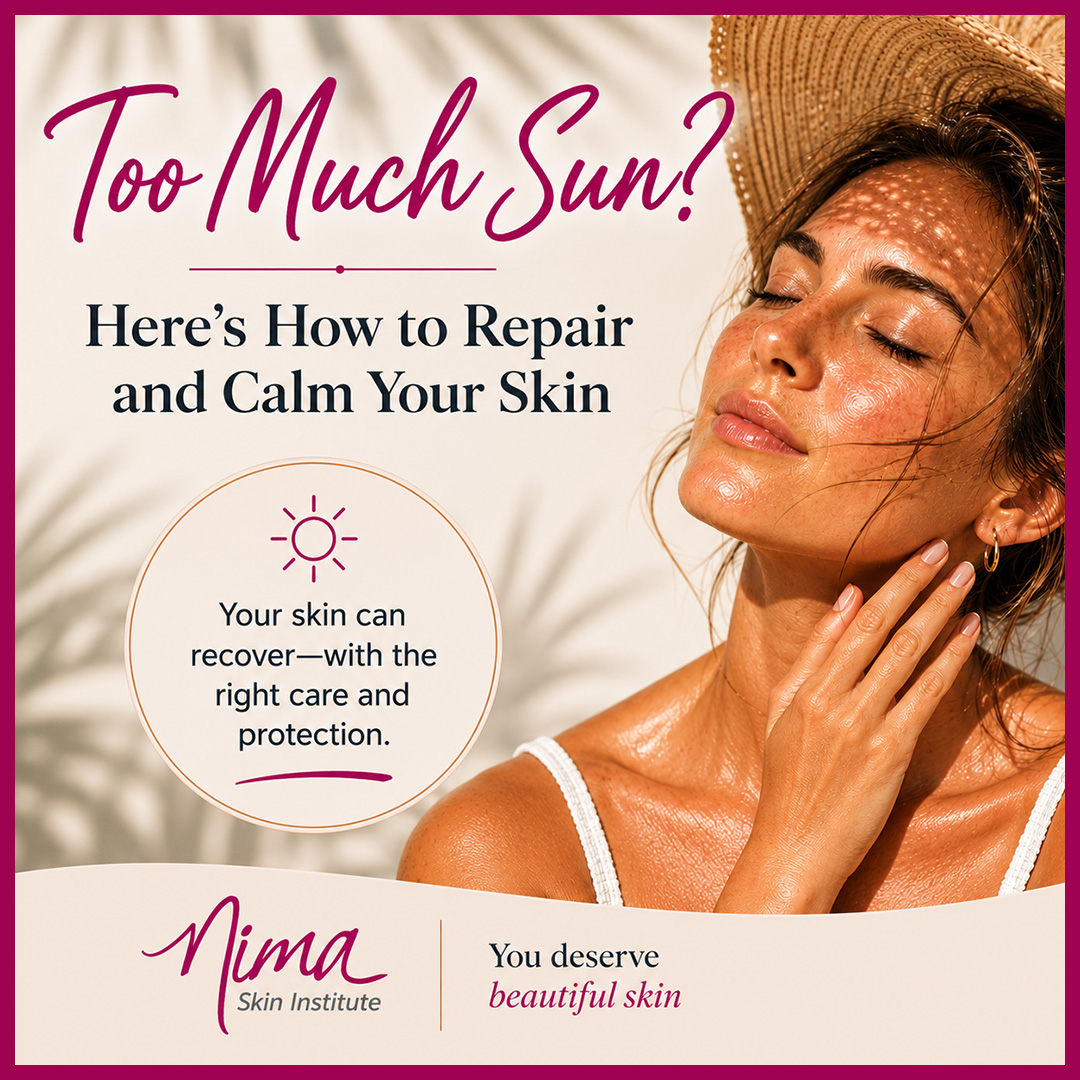
Too much sun doesn’t always show up as a severe burn. Sometimes your skin simply feels irritated, dehydrated, sensitive, or uneven afterward. Heat and UV exposure create inflammation within the skin, weaken the skin barrier, and can trigger longer-term pigment changes if not managed properly. The good news is that sun-stressed skin often responds well to the right combination of recovery, hydration, and protection.
What Happens to Your Skin After Too Much Sun?
Even without a visible sunburn, UV exposure affects the skin in several ways. You may notice redness, sensitivity, dryness, rough texture, flushing, or dullness afterward. For some people, especially those prone to melasma or hyperpigmentation, even moderate sun exposure can trigger lingering discoloration.
First Steps to Calm Sun-Stressed Skin
When your skin feels irritated after sun exposure, simplicity matters. Avoid aggressive exfoliation, harsh scrubs, or strong active ingredients while your skin is inflamed. Instead, focus on gentle cleansing, lightweight hydration, barrier-repair moisturizers, cooling ingredients, and consistent sun protection.
Hydration is especially important because sun exposure disrupts the skin’s ability to retain moisture effectively.
In many cases, giving your skin time to recover while supporting the skin barrier is the best first step before considering more corrective treatments.
Prevention Still Matters Most
Repairing sun damage is possible, but prevention remains the best long-term strategy. Daily use of a broad-spectrum SPF of at least 30, along with hats, protective clothing, and consistent skincare habits, all help maintain healthier skin over time. Sunscreen is especially important after professional treatments, when the skin may be temporarily more sensitive to UV exposure.
The goal is not avoiding the outdoors. It’s helping your skin stay healthier and more resilient while still enjoying your summer.
When to Seek Professional Help
Some sun-related skin changes improve with hydration and time. But if redness, irritation, or pigmentation continues to worsen, it may be time for a professional evaluation.
You should consider scheduling a consultation if you notice:
- Persistent redness or sensitivity
- Dark spots or uneven pigmentation becoming more noticeable
- Skin that feels chronically inflamed or reactive
- Melasma flare-ups after heat or sun exposure
- Rough texture or dullness that lingers
- Changes in moles or spots that look irregular or new
Pigment changes also don’t always appear immediately. Freckles, sunspots, and melasma can become more noticeable days or weeks after repeated UV and heat exposure. Early evaluation often helps prevent discoloration from becoming more difficult to treat later.
When Sun Exposure Becomes More Serious
Severe sunburn, sometimes referred to as “sun poisoning,” may require immediate medical attention. If you develop blistering over large areas of the body, fever, chills, nausea, dizziness, dehydration, confusion, or significant swelling after sun exposure, contact a medical professional promptly or seek urgent care.
Taking the Next Step
If your skin feels irritated, uneven, or more reactive after time in the sun, we can help you develop a personalized recovery plan that supports both short-term healing and long-term skin health.Please feel free to contact us for an appointment and learn which treatments and skincare options best fit your skin, lifestyle, and goals.