Summer can be especially frustrating if your skin is prone to redness, sensitivity, or breakouts. During the warmer months, I see many patients whose rosacea, acne, or overall skin irritation suddenly becomes harder to control.
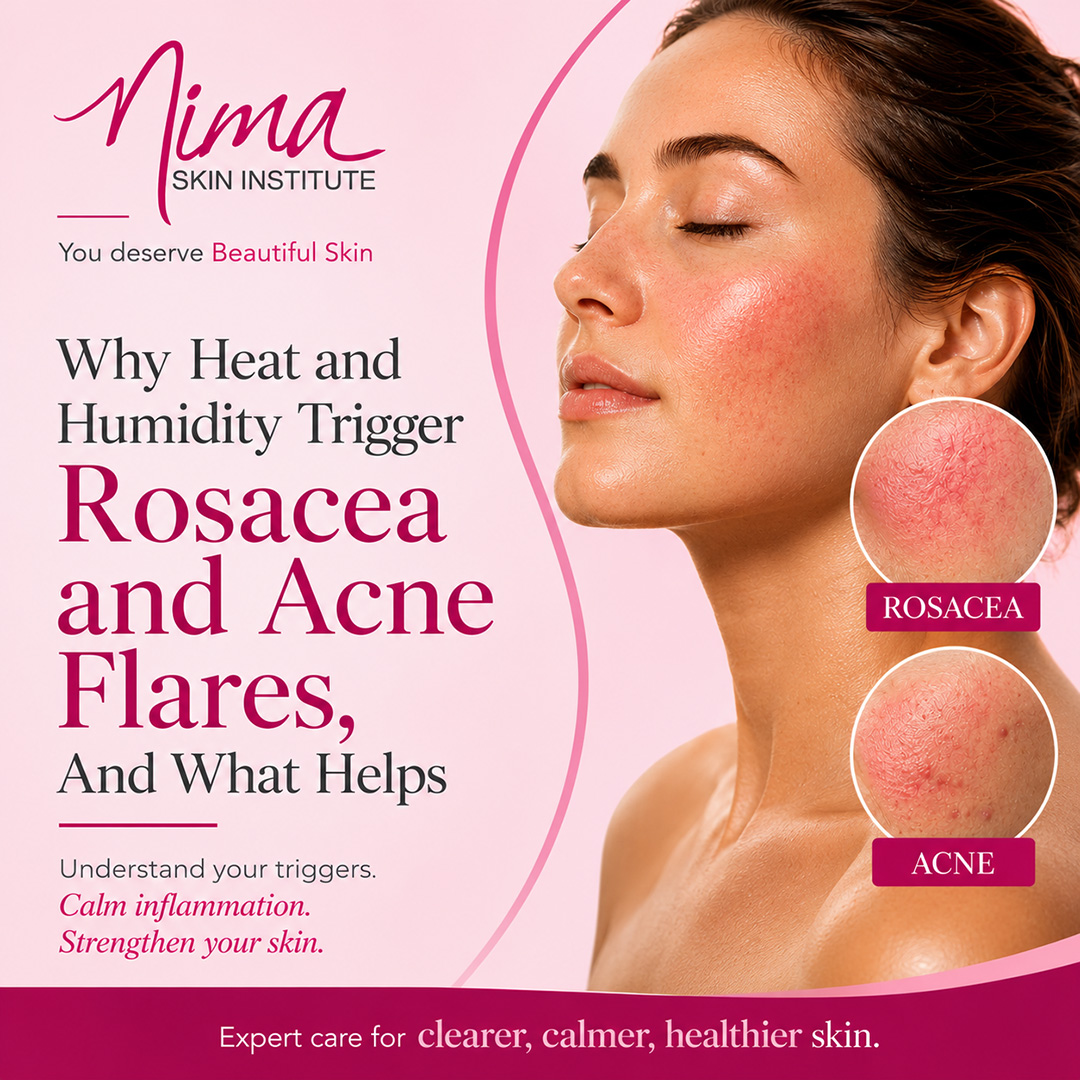
Heat, humidity, sweating, and increased sun exposure all affect the skin differently. In Chicago, summer weather often shifts quickly between high heat, humidity, strong UV exposure, and heavily air-conditioned indoor spaces. Those constant changes place stress on the skin barrier and increase inflammation.
Why Summer Triggers More Skin Flares
Heat causes blood vessels to dilate, which increases facial redness and flushing. Humidity and sweat increase oil production and allow bacteria, sunscreen, and debris to remain on the skin longer. UV exposure further intensifies inflammation, even after relatively short periods outdoors.
For some patients, this leads to rosacea flares with persistent redness and sensitivity. For others, it contributes to clogged pores and acne breakouts. Many patients experience both simultaneously.
Common summer triggers include:
- Heat and sweating
- Sun exposure
- Spicy foods and alcohol
- Heavy skincare or makeup products
- Aggressive exfoliation or over-cleansing
In many cases, it’s the cumulative effect of multiple triggers that pushes the skin into a flare.
Why Rosacea Often Gets Worse in Summer
Rosacea-prone skin reacts more aggressively to heat. Blood vessels dilate more easily, increasing flushing and visible redness. Sweat, UV exposure, and harsh skincare products can further disrupt already sensitive skin.
Many rosacea patients also have underlying barrier dysfunction, meaning the skin loses moisture more easily and becomes increasingly reactive over time.
You may notice:
- Persistent redness
- Burning or stinging
- Dry, irritated skin
- Increased sensitivity to products
- Small inflammatory bumps
One of the most common mistakes I see during summer is over-treating the skin. Harsh scrubs, strong acids, and aggressive skincare routines frequently worsen rosacea rather than improve it.
Why Heat and Humidity Can Trigger Acne
Summer breakouts are also extremely common. Heat and humidity stimulate oil production, while sweat and sunscreen contribute to congestion when they remain on the skin too long.
Additional factors, including friction from hats or workout gear, touching the skin frequently, and over washing the face, often increase irritation and inflammation.
Many patients assume stronger acne products are the answer during summer, but stripping the skin usually leads to more redness and irritation, and excess oil production.
The Common Link: Inflammation
Rosacea and acne are different conditions, but both become more difficult to control when the skin barrier is inflamed and disrupted.
That’s why I typically recommend focusing first on calming and stabilizing the skin rather than aggressively treating every symptom at once.
Simple habits often make a significant difference:
- Use a gentle cleanser
- Wear a broad-spectrum SPF of at least 30 every day
- Remove sweat after workouts or outdoor activity
- Avoid harsh exfoliation during flares
- Keep your skincare routine consistent and uncomplicated
Our goal is to calm inflammation, strengthen the skin barrier, and help you maintain healthier, more balanced skin throughout the hottest months of the year.
When to Have Your Skin Evaluated
Occasional summer flare-ups are common. But if redness becomes persistent, breakouts worsen despite appropriate skincare, or your skin frequently burns or stings, it’s important to have your skin evaluated professionally.At Nima Skin Institute, my team and I take a personalized approach to reactive summer skin. Please feel free to contact us for an appointment.