
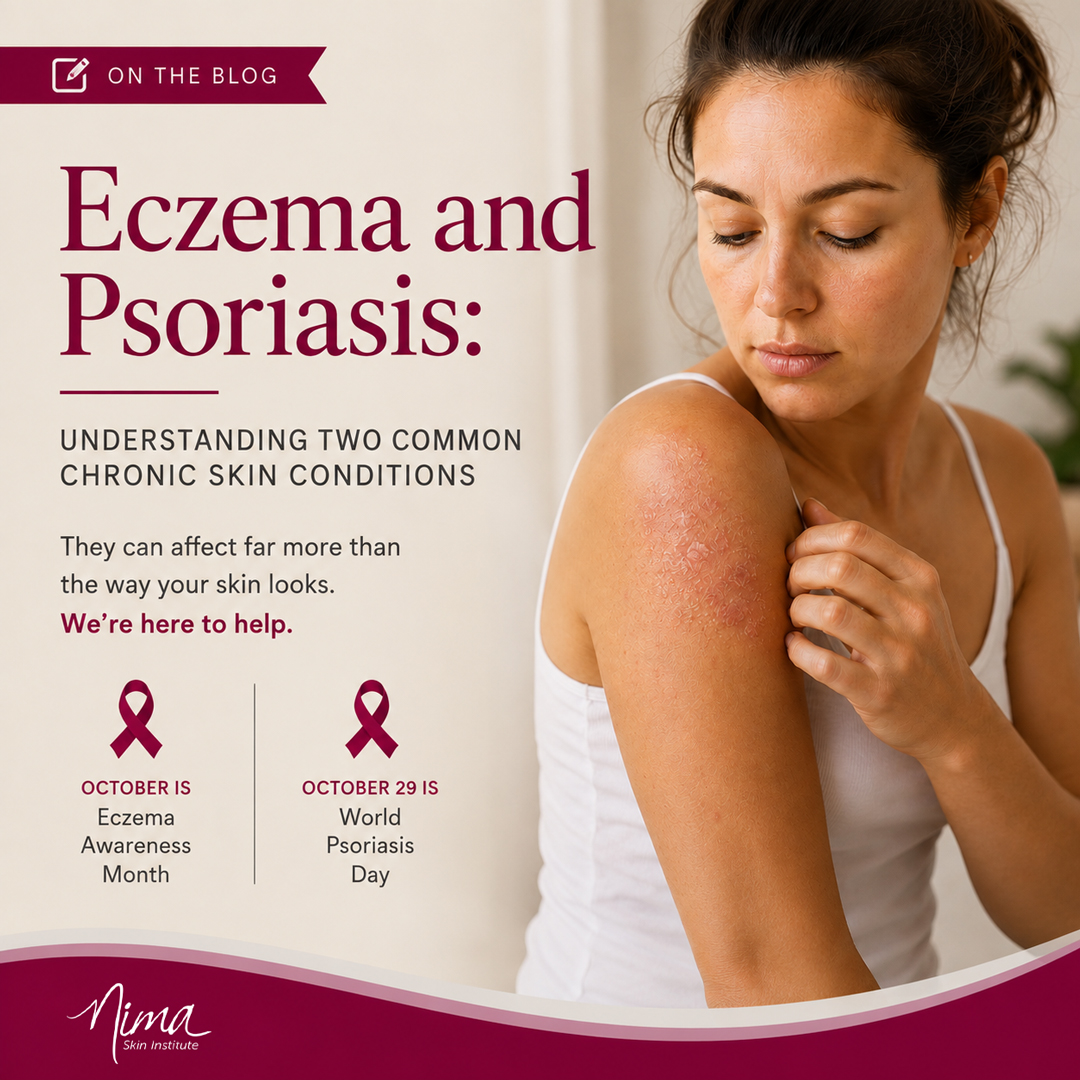
Eczema and psoriasis are two common skin conditions that can affect far more than the way your skin looks. Both can cause itching, irritation, discomfort, and visible changes that may interfere with sleep, daily activities, and how comfortable you feel in your own skin.
Although eczema and psoriasis can sometimes look similar, they are different conditions with different causes and treatment considerations. Both can also be chronic, meaning symptoms may improve for a period of time and then flare up again.
October Is Eczema Awareness Month,
and October 29 Is World Psoriasis Day.
Understanding Eczema
Eczema, also called atopic dermatitis, is an inflammatory skin condition that often causes dry, itchy, sensitive skin. The skin may become red or discolored, rough, scaly, cracked, or irritated, depending on your skin tone and the severity of the condition.
Symptoms can range from relatively mild to recurring flares that become extremely uncomfortable. Dry weather, heat, sweat, certain fabrics, fragrances, skincare products, allergens, and stress may all contribute to a flare. Because triggers vary from person to person, identifying patterns can be an important part of managing the condition.
How Is Psoriasis Different?
Psoriasis is a chronic immune-mediated condition that causes skin cells to build up more quickly than normal, resulting in thick, raised areas of skin, often with scaling. Plaque psoriasis is the most common form, but the condition can appear differently depending on the type and where it develops.
Symptoms may improve and then return in response to triggers such as stress, illness, skin injury, or certain medications.
Psoriasis isn’t simply a cosmetic concern. In some patients, it can also be associated with psoriatic arthritis, making proper diagnosis and ongoing medical care particularly important.
The Impact Goes Beyond the Skin
The itching associated with eczema can make it difficult to sleep or concentrate. Psoriasis may cause soreness, cracking, or irritation that makes everyday activities uncomfortable. When either condition affects visible areas such as the face, hands, arms, or scalp, patients may also feel self-conscious about their appearance.
Living with a chronic skin condition can be frustrating, especially when symptoms improve only to return unexpectedly. Understanding your condition, recognizing potential triggers, and following an appropriate treatment plan can help reduce its impact on your daily life.
Treatment Starts With the Right Diagnosis
Because eczema, psoriasis, and several other skin disorders can share similar symptoms, it’s important to know what we’re actually treating.
When I evaluate your skin, I look at the location and appearance of the affected areas, your symptoms, how long you’ve experienced them, potential triggers, and your medical history. From there, we can determine an appropriate treatment.
Depending on the condition and its severity, treatment may include changes to your daily skincare routine, prescription topical medications, oral or injectable medications, or other therapies. We’ll also discuss ways to reduce irritation and help support healthier skin between flares.
Managing Your Skin Between Flares
Daily care is an important part of managing both eczema and psoriasis. Gentle cleansing, regular moisturizing, avoiding known irritants, and protecting your skin from excessive dryness can help maintain the skin barrier.
Your needs may also change when you’re experiencing a flare. Products or ingredients that are normally well tolerated may become irritating, making it important to adjust your routine.
If you’ve been dealing with persistent itching, scaling, irritation, or recurring rashes, don’t assume you simply have dry or sensitive skin. An accurate diagnosis can make a significant difference in managing your symptoms.Please feel free to contact us for an appointment. Together, we’ll evaluate what’s happening with your skin and develop a treatment plan.